

You’re checking your comp set and a competitor with a clearly worse review score is sitting above you on Booking.com.
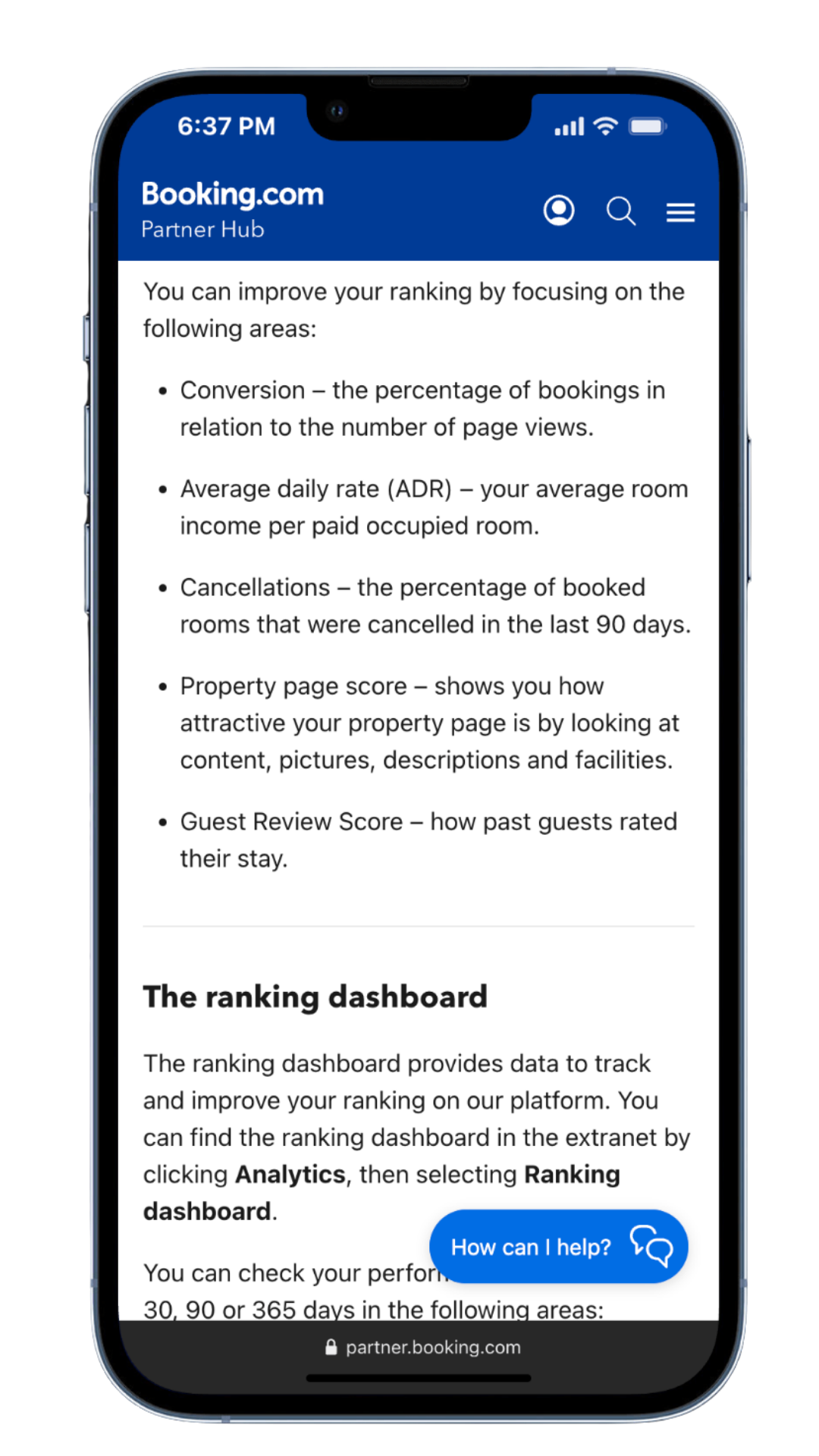
Booking’s documentation says review score is one of the two heaviest ranking factors it has, together with conversion.
So the ranking you’re looking at shouldn’t be possible, at least not from what Booking tells you about how it works.
I run into exactly this anomaly on one property.
Ruling out the obvious explanations leads me to three details on the listing that Booking never documents anywhere, and to a hypothesis about why they might matter.
This stays an open question, not a confirmed answer, and the rest of this piece is what I find plus how you can check whether you’re looking at the same pattern.
The anomaly
The comp set is nothing unusual, just one market where these properties get shopped against each other constantly.
One property with a 7.9 review score is ranking above several competitors sitting at 9.0, 9.2, even 9.4, which is exactly the kind of gap review score is supposed to prevent, since it’s one of the two heaviest factors in Booking’s own system.
Something else is doing the work.

Ruling out the usual suspects
Conversion is the first thing to check, and it’s possible, but the higher-ranked property isn’t undercutting on rate, doesn’t have anything unique about the product, and sits in a spot on the map that isn’t meaningfully better.
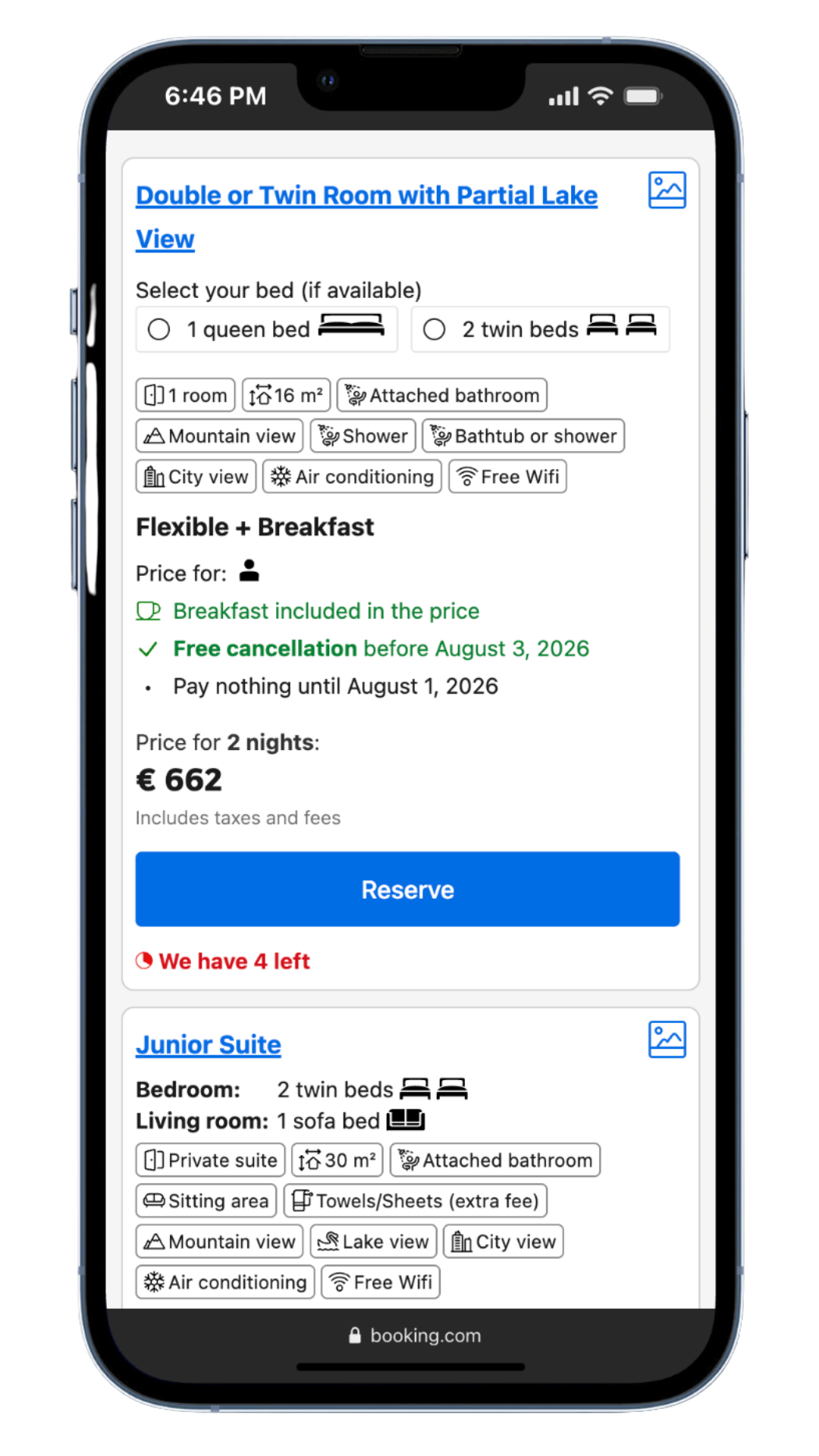
Cancellation rate is the second candidate, and it doesn’t hold up either: their public rates already include plenty of flexible cancellation options, so a stricter policy pushing conversion up isn’t the explanation.
Nothing in Booking’s documented ranking factors accounts for the gap.
Three things that are different on the listing
Looking past the documented factors, three details stand out.
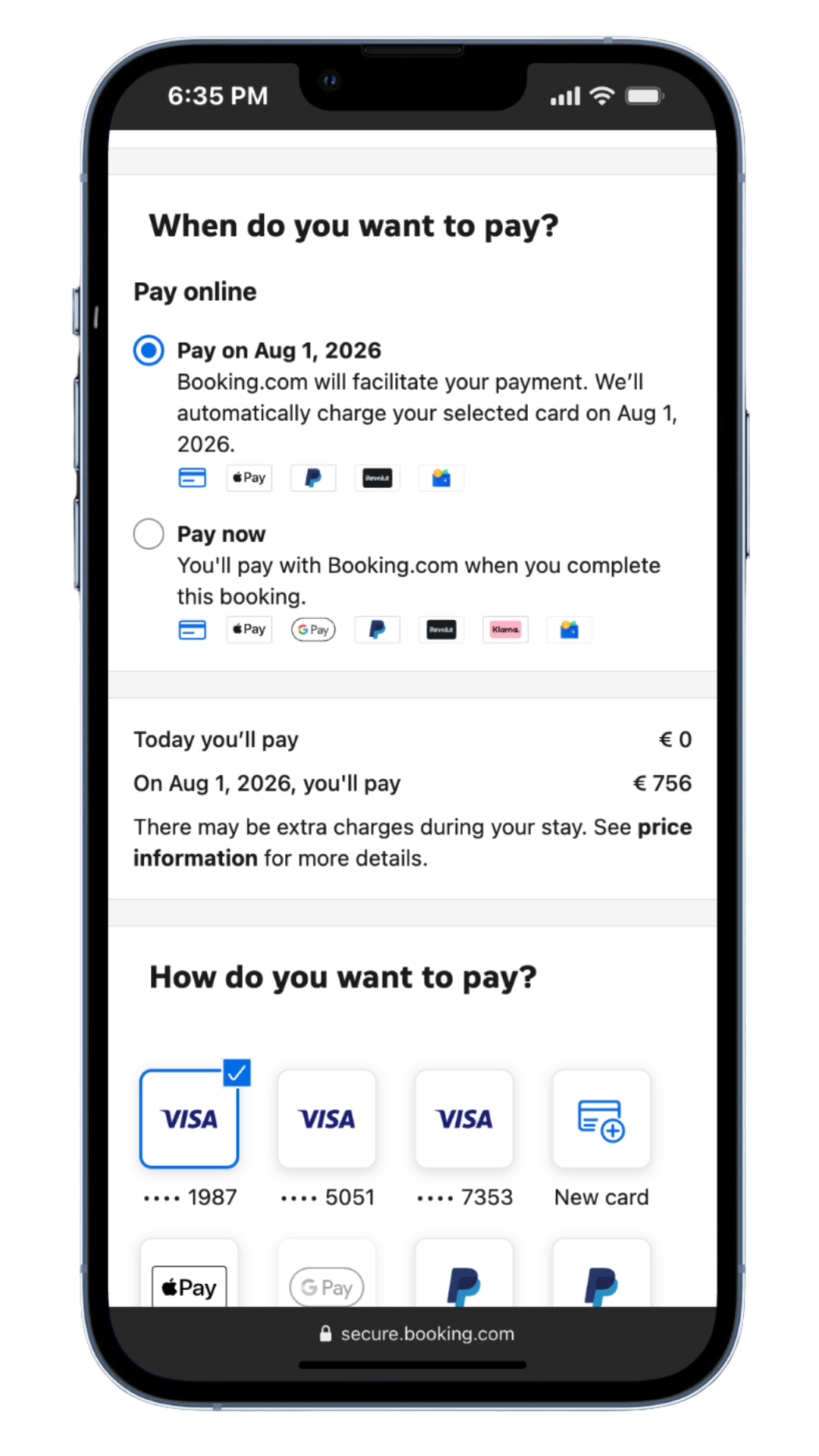
Online payment is enabled on most rates, and Booking’s virtual card is activated.
More telling than either of those: Expedia is closed entirely, and the property sells almost exclusively through Booking.
None of this appears in Booking’s public ranking documentation, and all of it points in the same direction.
The mechanism I think is behind it
Booking’s virtual card exists as a structural tool to fight rate leakage, the practice where Expedia sells a hotel’s rooms below Booking’s public price using net rates, with Expedia collecting payment and absorbing the discount out of its own commission.
It’s Booking defending its own price integrity against a rival OTA on shared inventory.
If a hotel isn’t on Expedia at all, there’s no rate leakage battle for Booking to fight on that inventory.
The property becomes what I’d call a clean listing on Booking’s platform, with no leakage to defend against and no rate to police.
My hypothesis is that Booking quietly rewards these clean properties with ranking visibility they wouldn’t otherwise earn, as a byproduct of having one less distribution conflict to manage on that inventory.
I can’t prove this from outside the algorithm.
It’s the most plausible explanation I find for an anomaly that Booking’s own documentation doesn’t cover, but it stays a hypothesis until someone with access to the algorithm confirms or kills it.
The bigger question: is leaving Expedia worth it
Even if the hypothesis holds, it opens a bigger question.
Closing Expedia doesn’t delete the demand for that hotel on those dates, most of those guests are still searching for the same destination and simply book wherever they land next.
The number that matters is how much of that demand reallocates to Booking once Expedia is gone, and how much is genuinely lost to guests who only book through Expedia’s app or loyalty program, not the raw revenue Expedia represents today.
There’s a second effect layered on top of that reallocation, if the ranking-lift hypothesis from earlier holds.
A hotel that becomes a clean listing recaptures the guests who would have booked through Expedia anyway, and converts more of them too, because it now shows up higher for searches it was already getting.
Here’s a hypothetical to make both effects concrete.
These are illustrative numbers, not the data from the case above, which I don’t have full visibility into, and the ranking-lift part of it rests entirely on a hypothesis I can’t confirm.
Say a hotel books 22% of its volume through Expedia at an 18% commission, average booking value 340€.
Say that once Expedia closes, 70% of that volume reallocates to Booking at a 15% commission, and the remaining 30% is genuinely lost, guests who don’t rebook anywhere else.
On 22 bookings a month at that value, the hotel keeps roughly 6,130€ net from Expedia today.
Pure reallocation, with no ranking lift at all, gets the hotel to around 4,450€ net on that same slice of demand through Booking.
Add a ranking lift of just 10% more bookings on that reallocated volume, and the number moves to roughly 4,900€, closer to the original 6,130€ than the pure-reallocation math alone would suggest.
Nobody has published a general version of this model, and the ranking-lift portion of it is the least certain part of the whole piece.
It depends on how much of a hotel’s Expedia demand is genuinely channel-loyal, how much simply reallocates, and how real the ranking lift turns out to be once someone can test it against Booking’s own data, not assumed from a blog post.
What to check in your own comp set
If a lower-scored competitor is outranking you, start with the documented factors: their conversion rate, their cancellation policy, their pricing.
Rule those out the way I do before going further.
Then check the same three signals I look for: online payment enabled, virtual card status, and whether they’re still selling on Expedia.
If they’ve closed Expedia and you haven’t, you may be looking at the same pattern.
What do you see when you check your own comp set?



![Why More Direct Bookings Can Mean Less Total Revenue [thumbnail]](https://www.directyourbookings.com/wp-content/uploads/2026/01/Why-More-Direct-Bookings-Can-Mean-Less-Total-Revenue-thumbnail.jpg)


